
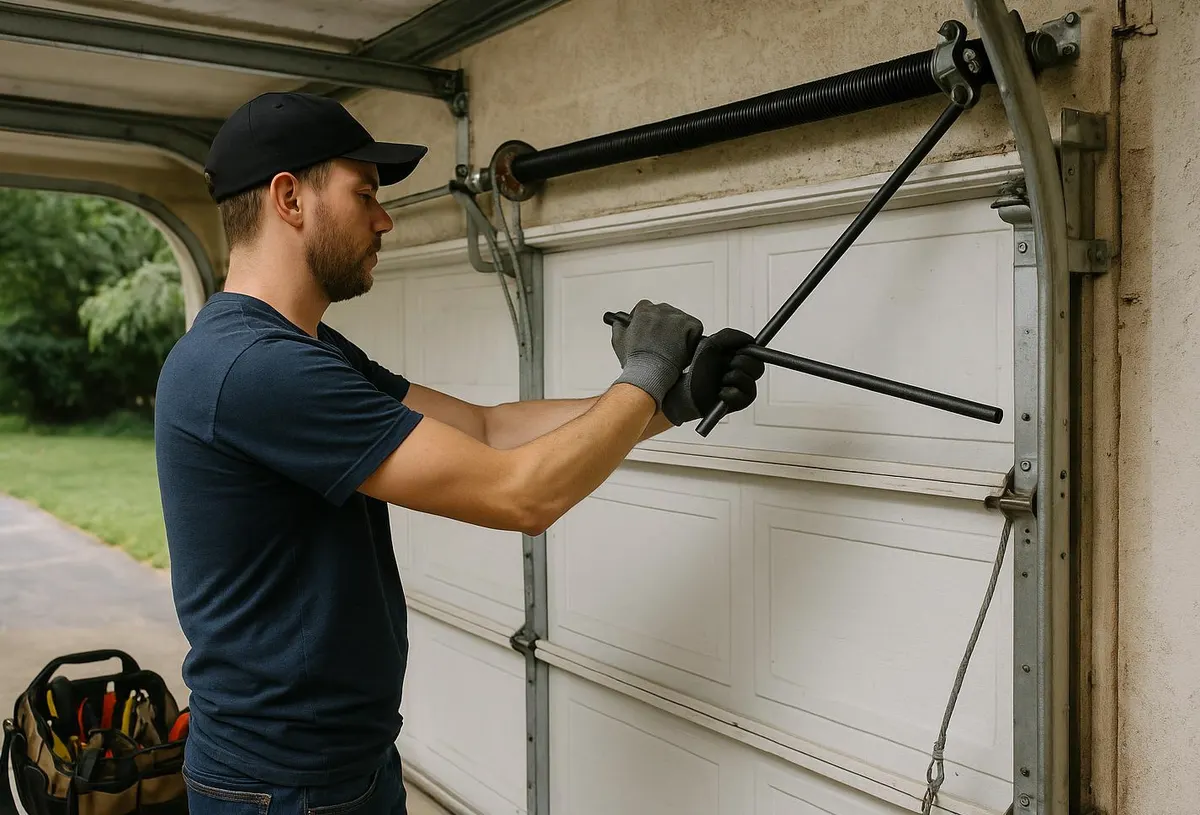
The argument usually starts the same way: someone looks at the overhead door on a detached shop, pole barn, or home-business garage and says, "It's basically the same as the one on the house, just bigger." It's a tempting conclusion. The door has panels, a track, springs, and an opener, just like the residential door you've already got. Same parts, same idea, just scaled up, right? That assumption is exactly where people get into trouble, because a commercial or warehouse-grade overhead door is built and used differently enough that treating it like an oversized house door leads to premature failures, safety gaps, and maintenance that doesn't match how hard the door actually works.
Why the Size Comparison Falls Apart
A residential garage door is engineered around a predictable, light-duty pattern: maybe two to four open-and-close cycles a day. A commercial or warehouse door built for a shop, loading area, or home-based business can be cycled dozens of times daily. That difference in use is the whole reason the construction isn't comparable, even when the dimensions look similar.
Construction and Materials
Commercial-grade doors typically use heavier-gauge steel, thicker insulation layers, and reinforced panel sections designed to hold up under frequent impact, wind load, and repeated cycling. The track and roller hardware is also built heavier, with larger rollers and sturdier hinges, because lighter residential-grade hardware wears out fast under commercial-level use.
Springs Rated for Cycles, Not Just Weight
This is the one most homeowners miss entirely. Residential torsion springs are usually rated for somewhere in the range of 10,000 to 20,000 cycles, which fits a house door's light daily use for years. A door that opens and closes dozens of times a day needs a spring rated for tens of thousands more cycles, or it will fail far sooner than expected, sometimes within a year or two instead of a decade. If a shop door has a spring that looks identical to a house door's spring, it's very likely the wrong spring for the job.
Openers Built for Duty, Not Just Horsepower
Residential chain or belt-drive openers are designed for intermittent use. Commercial applications often call for continuous-duty rated operators, and in some cases jackshaft-style operators mounted beside the door instead of overhead, which free up ceiling space and hold up better under constant cycling. Putting a standard residential opener on a door that gets used like a commercial one is one of the most common ways people end up with an opener that burns out within months.
Safety Equipment
Any overhead door used regularly by multiple people, or one near foot traffic in a work setting, typically needs more robust safety features: photo-eye sensors, sensing edges, and sometimes additional interlocks. Residential doors have basic safety reversal, but a door that sees heavier use and more people around it needs a higher standard of protection.
Maintenance Needs Don't Match Either
Because a commercial-pattern door accumulates cycles so much faster, it needs a tighter maintenance rhythm than a once-or-twice-a-year check on the house door:
- Lubrication more often. Rollers, hinges, and torsion springs on a heavily cycled door dry out faster and need more frequent attention to avoid grinding and premature wear.
- Hardware inspection on a shorter interval. Bolts, hinges, and track alignment loosen faster under repeated use, so a quarterly look instead of an annual one makes sense for a door that's working hard.
- Cycle tracking for springs. Rather than waiting for a spring to snap, a cycle-rated spring on a heavily used door should be evaluated on a schedule tied to how often it's actually cycling, not just its age.
- Weatherstripping and bottom seals checked seasonally. Any detached shop or pole barn door exposed to the elements needs its seals checked before winter sets in.
Local Weather Makes the Gap Wider
Around here, winters bring ice, road salt tracked in on vehicles, and big temperature swings that stress metal hardware and seals. A door cycling dozens of times a day in that environment sees far more exposure to grit and moisture working into tracks and hinges than a house door that only opens a few times daily. Heading into the colder months is a good time to check that a shop or pole barn door's seals, track lubrication, and hardware are ready for ice and salt buildup, since a heavily used door will show the effects of neglect much faster than a lightly used one.
If You've Got a Hybrid Situation
Plenty of homes in this area have a detached garage, pole barn, or home-based workshop that gets used more like a small business space than a typical house garage. If that door is being opened and closed all day for a side business, deliveries, or shop work, it's worth having it evaluated for whether the spring, opener, and hardware actually match that level of use, rather than assuming a standard residential setup is good enough.
When to Call Plainfield Garage Door
If a shop or detached garage door is getting heavy daily use, is still running on residential-grade springs or an opener that wasn't built for that kind of cycling, or the hardware is showing wear faster than it should, it's worth having it looked at before something fails mid-use. Plainfield Garage Door can evaluate the door's current setup, recommend correctly cycle-rated spring replacement, and handle garage door opener repair and installation suited to how the door actually gets used, whether that's a heavier-duty residential operator or a commercial-style setup.
If you've got a shop, pole barn, or home-business garage door working harder than a typical house door around Plainfield, Naperville, Bolingbrook, Romeoville, Joliet, Oswego, Aurora, or Shorewood, give Plainfield Garage Door a call and get it set up to handle the load it's actually under.